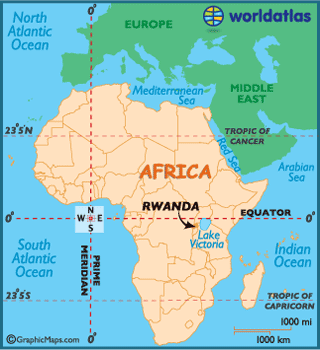
Well, I have been here nearly three weeks, and things are becoming more familiar.
Preaching is great! The city of Kigali is very hilly, however, so you get quite a bit of exercise going up and down the slopes. In the wealthier areas (see below), you have a nice panoramic view of the city. (Ties are optional! Yes!)
The brother in this photo is Eugène, a Congolese in the English Congregation. He was a banker when he learned the truth, and apparently doing very well financially, but gave up that career to be a part-time vendor and pioneer. Also, you would not believe he had a black belt in karate at one time, because now he is quite mild-mannered.
 |
| Nice view! |
 |
| Business territory |
Business territory is one of the best places to find the English speakers. People in businesses are not just polite, they are receptive. They eagerly accept our magazines. Many Bible studies are being conducted in shops and offices all over the city.
Of course, the preaching work is what makes living here worthwhile. However, what are some of the challenges?
- Walking 4-6 hours in the dirt, African sun, and occasional rain (don't worry, by April it will be torrential and nearly every day) while preaching.
- Trying to figure out where I am. Trying to remember where I was last week, and how to get there. Doing so while keeping my shoes as mud-free as possible.
- Mosquitoes at night. If you forget to close your windows before dusk, they start entering the house. Then you are plagued all night by this annoying buzzing sound around your head. When you switch the light on (assuming there is power), they have this amazing ability to disappear. After their bloodsucking spree, however, they get heavy and have to land on the wall in a stupor. Then you can smash them easily, taking care to wash your hand, and the wall, afterward. I should write a book on this subject.
- No water in the house for over a week. Learning how to take a shower using buckets.
- One meal per day. The main reason for this is that where my roommates and I live, though it is a fairly new building, cooking is only allowed outside the house. The landlord does not want cooking inside because of some potential problem with the roof (I don't know, maybe it will catch on fire). As it happens, my roommates had no cooking facilities when I first arrived, but recently they bought a detachable double burner. So until we can figure out how to use it outside the house, it sits in the corner of the living room, continually snagging the cord when I am ironing my shirts on two sofa cushions stacked one on top of the other. The result is that we eat out, or we buy food that doesn't require heating, such as snacks. I therefore eat my big meal at lunch, for example, at one of the buffets in town, and snack the rest of the time. Because of this, and also due to the many hours of walking, probably I have dropped a fair amount of weight. Until I get to a scale this is unverifiable, however.
- Communication. Signs are in English, French, and Kinyarwanda--about in equal proportion--but on the street you hear only Kinyarwanda. For many years, French was taught in the schools, due to the Belgian colonization as well as diplomatic ties with France. However, about seven years ago, Rwanda had a falling out with France, and the result was that the present regime has sought closer ties with the English-speaking world. So now they teach English, not French, in the schools. This means that it is the older people who speak French, and the younger people who speak English. That last statement should be qualified by the fact that the quality of the English is poor, because students do very little speaking, just copying sentences in a notebook. They need to adopt the accelerated language-learning methods used by our organization!
How to get places:
 |
| Note "Kabeza" on the windshield. That's my neighborhood! |
Sorry, no subway here. Buses are the cheapest, although not always the fastest way to get around, due to their frequent stops. But they are faster than walking.
Having previously lived in Malawi, I do appreciate the fact that here in Rwanda the doors of the buses don't fall off. There are no gaping holes in the floor. Goats, chickens, and open vats of fish are not allowed on the bus. No more than four people may sit in one row. We (the passengers) never have to get out and push.
As a side note, you are not allowed to (1) walk on the median grass of a wide street, or (2) eat while walking on the street. Traffic laws are rigorously enforced. Plastic bags are banned. So there are some standards here that contribute to order, but they can be a bit strict at times.
Here is another way to get around:
 |
| Moto-taxi |
You can hop on the back of one of these motorbikes and pay anywhere from $0.30 to $1.50, depending on how far you need to go. These guys can sometimes be daring, weaving in and out of car traffic, but at least they give you a helmet to wear. There are some places that the buses do not go, or you have to wait a long time for them to come. So the motos come in handy. Just make sure your insurance is paid up!
In case some may be wondering if life in Africa is characterized by spear-brandishing natives in loincloths and wild animals lurking about at every turn, I should mention that Kigali is quite a modern city. Almost everyone has a cell phone. People walk down the street wired to some electronic device. There are a lot of cars, and there is rush-hour traffic, just like in other large cities. In town you see skyscrapers and businessmen scurrying about. There are brand-new shopping malls. Of course, there are also poorer neighborhoods, with mud-brick houses and tin roofs, and rough dirt paths.
The difference, I think, between African life and life in the West is that people here are less isolated. They interact with each other continually. You see friends walking down the street, chatting away enthusiastically. Families are large and very hospitable. The problem is walking any distance at all without stopping to talk to someone. Actually, that is a good problem to have.
I'll close with this final observation:
What Africa lacks materially, it more than makes up for in heart.